
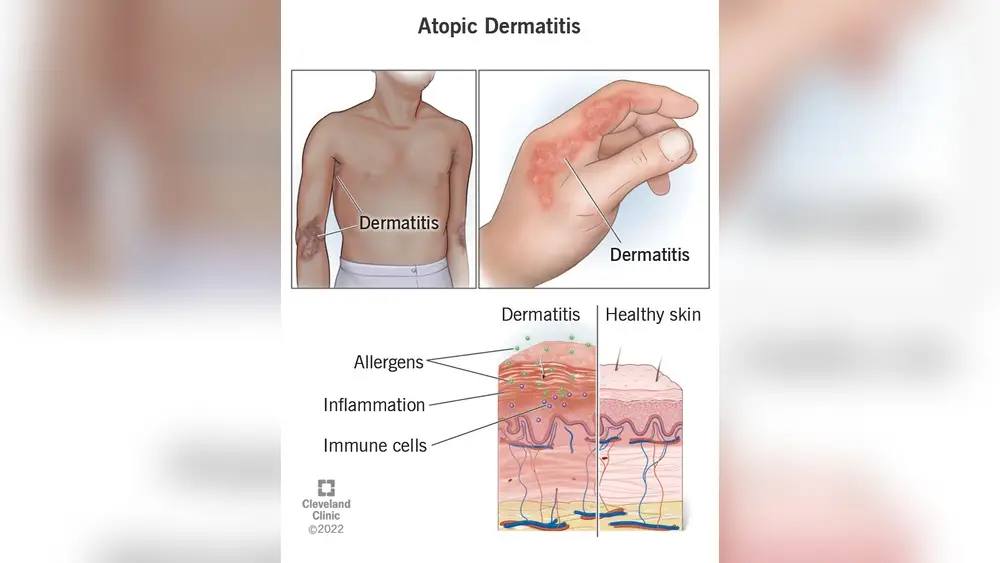
If you notice an itchy, red patch on your skin, you might wonder: Can contact dermatitis spread to other parts of your body or to other people? This question confuses many people, especially those dealing with skin rashes for the first time. Understanding how contact dermatitis behaves can help you manage it better and avoid unnecessary worry. Many myths surround skin conditions, so it’s important to get clear facts.
What Is Contact Dermatitis?
Contact dermatitis is a skin reaction caused when your skin touches something irritating or allergenic. It’s not a disease, but a response. You may see redness, swelling, itching, or blisters. There are two main types:
- Irritant contact dermatitis: Caused by direct damage from a substance (like soap, cleaning chemicals, or solvents).
- Allergic contact dermatitis: Caused by your immune system reacting to something (like nickel, poison ivy, or fragrances).
Both types look similar but have different causes. Contact dermatitis is common—about 15–20% of people experience it at some point.
Does Contact Dermatitis Spread?
This is the main concern for most people. The simple answer: Contact dermatitis itself does not spread from person to person, and the rash does not move from one area to another by itself. However, some factors can make it seem like it spreads. Let’s break this down:
Why It May Look Like It’s Spreading
- Delayed reactions: Your skin may react hours or days after contact. New patches might appear later, making it look like the rash is spreading.
- Continued exposure: If you keep touching the irritant or allergen, new areas will react. For example, if you touch poison ivy and then scratch your arm, you could transfer the oil, causing new rashes.
- Scratching and touching: When you scratch, you may move the substance to other parts of your skin. This does not mean the rash itself is spreading—it’s new exposure.
- Different sensitivity: Some areas of skin are more sensitive. You might see the rash appear where the skin is thinner.
The Science Behind Spreading
Contact dermatitis is a localized reaction. The affected skin shows inflammation where it touched the trigger. It does not send the rash through your bloodstream. Even if the rash looks like it’s spreading, it’s almost always due to repeated contact, not a contagious process.
Can Contact Dermatitis Be Contagious?
This is a common worry. Contact dermatitis is not contagious. You cannot catch it from someone else, nor can you pass it on. The rash is your skin’s response to a specific substance. If someone else touches your rash, they will not get it unless they touch the same irritant or allergen.
Exception: If you have poison ivy, the oil (urushiol) can stick to your skin, clothes, or objects. If someone else touches the oil, they can develop their own rash, but not from your skin itself.
How Contact Dermatitis Develops
Understanding how the rash forms helps explain why it doesn’t truly spread.
- Initial contact: Your skin touches the irritant or allergen.
- Reaction time: For irritant dermatitis, the response is usually quick. For allergic dermatitis, it may take hours to days.
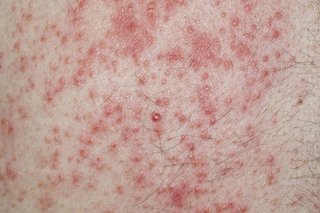
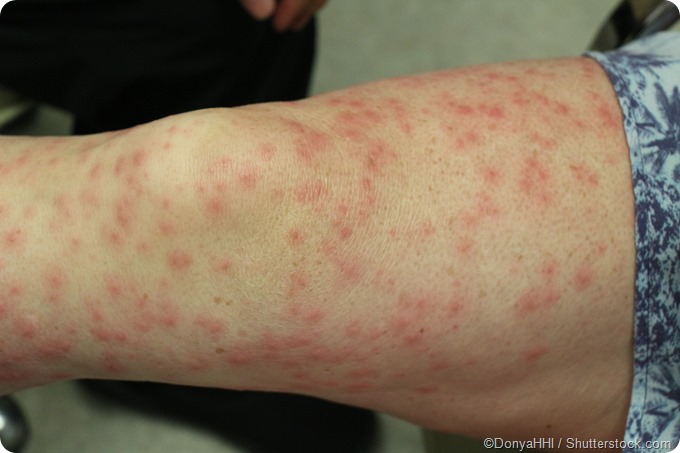
- Local inflammation: The area becomes red, itchy, and may blister.
- New exposures: If you touch other areas with the trigger, those spots will react.
The reaction is always limited to skin that touched the cause. It does not move internally.
Credit: www.nhs.uk
Factors That Make Contact Dermatitis Seem Worse
Some situations can make contact dermatitis look like it’s spreading or getting worse:
- Continued contact with the trigger
- Not washing hands or affected skin
- Using creams or lotions that contain the irritant
- Touching contaminated surfaces
In these cases, more parts of your skin get exposed, so the rash appears in more places.
Examples And Real-life Scenarios
Example 1: Poison Ivy
You touch poison ivy while gardening. Later, you scratch your face and arms without washing your hands. The oil transfers, and you get new rashes where you touched. This is not the rash spreading—it’s new exposure.
Example 2: Nickel Allergy
You wear a watch with a nickel band. The skin under the band reacts. If you stop wearing the watch, the rash stays in that area and does not move. If you wear another item with nickel, you may get a rash wherever it touches your skin.
Example 3: Soap Irritation
You use a harsh soap. The skin on your hands becomes dry and red. If you continue using the soap, more areas may react. If you switch soap, the rash slowly heals.
Data: How Often Does Contact Dermatitis “spread”?
Studies show that about 30–40% of people with contact dermatitis believe their rash is spreading. In reality, almost all cases are due to repeated exposure or delayed reaction. Only 2–3% involve true transfer of a substance like poison ivy oil.
Here’s a comparison of different triggers and their likelihood of causing apparent spreading:
| Trigger | Spreading (Real) | Spreading (Perceived) |
|---|---|---|
| Poison Ivy | Yes (if oil is transferred) | Very Common |
| Soap/Cleaners | No | Occasional |
| Nickel | No | Rare |
| Fragrances | No | Sometimes |
Preventing Contact Dermatitis From Getting Worse
To stop contact dermatitis from “spreading,” you need to:
- Identify and avoid the trigger: Think about what touched your skin before the rash started.
- Wash skin and objects: Use mild soap and water to remove any leftover irritant or allergen.
- Avoid scratching: Scratching breaks skin and may transfer the trigger.
- Use safe creams: Apply hypoallergenic moisturizers or doctor-recommended creams.
- Change habits: If a watch, ring, or clothing is causing a reaction, stop using it.
Here’s a simple prevention comparison:
| Action | Effectiveness | Common Mistake |
|---|---|---|
| Washing skin | Very High | Using harsh soap |
| Avoiding irritant | High | Ignoring hidden triggers |
| Applying creams | Moderate | Using scented lotions |
| Covering rash | Low | Trapping moisture |
:max_bytes(150000):strip_icc()/ContactDermatitisSymptomsAniaoStudioGettyImages-23d8566b50aa4c26869700049480ba9f.jpg)
Credit: www.verywellhealth.com
Treatment Options
Most cases of contact dermatitis heal when you stop exposure. Here’s what helps:
- Cool compresses: Soothe itching and reduce swelling.
- Topical steroids: Reduce inflammation; use as directed by a doctor.
- Moisturizers: Protect skin and speed healing.
- Antihistamines: Help with itching, but do not cure the rash.
- Avoiding triggers: The most important step.
For severe cases, see a dermatologist. They may prescribe stronger creams or recommend patch testing to find the cause.
Non-obvious Insights
Many beginners miss these points:
- Delayed reactions are common: Allergic dermatitis often appears 24–48 hours after contact. This delay makes it seem like the rash is moving.
- Environmental factors matter: Humidity, sweating, and friction can make the rash worse or appear in new places—even if you did not touch the trigger again.
- Contaminated objects spread the allergen: Items like towels, shoes, or pets can carry the trigger. Cleaning these helps stop new reactions.
Credit: www.news-medical.net
When To See A Doctor
Contact dermatitis is usually mild, but you should seek medical help if:
- The rash is very painful or widespread
- You see signs of infection (pus, yellow crusts, fever)
- The rash lasts more than three weeks
- You do not know the cause
Doctors can help identify triggers and recommend safe treatments.
Quick Facts About Contact Dermatitis
- About 80% of cases are irritant contact dermatitis
- Allergic contact dermatitis is rising in children (mainly due to fragrances and preservatives)
- The most common triggers worldwide: Nickel, fragrances, poison ivy
- The rash does not spread inside your body or to others
How To Tell Contact Dermatitis From Other Skin Conditions
Some skin problems look like contact dermatitis but behave differently.
- Eczema: Can spread and affect large areas, often not linked to a single trigger
- Ringworm: A fungal infection that can spread and is contagious
- Psoriasis: Chronic and not linked to contact
If your rash spreads rapidly, has ring-shaped borders, or comes with fever, see a doctor.
Myth-busting: Common Misunderstandings
1. “contact Dermatitis Is Contagious.”
False. It’s not.
2. “the Rash Can Move Through My Body.”
False. It stays local to where you touched the trigger.
3. “i Can Get Contact Dermatitis From Someone Else’s Rash.”
False, unless you touch the same irritant/allergen.
The Role Of Allergens And Irritants
The chance of apparent spreading depends on the type of trigger.
- Irritants: Usually do not transfer; the rash stays in the area of contact.
- Allergens: Can transfer if the allergen is sticky (like poison ivy oil), causing new spots.
Some substances are more likely to stick and transfer. That’s why poison ivy is famous for “spreading” rashes.
Practical Tips For Managing Contact Dermatitis
- Keep a diary of what touches your skin before rashes appear.
- Wash your skin and objects after exposure.
- Avoid scented products if you’re sensitive.
- Use cotton gloves for cleaning or gardening.
- If you get a rash, treat it early to avoid complications.
Frequently Asked Questions
Can Contact Dermatitis Spread From Person To Person?
No, contact dermatitis is not contagious. You can only get it if you touch the same irritant or allergen.
If I Scratch My Rash, Will It Spread?
Scratching does not spread the rash itself, but it can move the trigger (like poison ivy oil) to new skin areas, causing more rashes.
How Can I Stop Contact Dermatitis From Getting Worse?
Avoid further contact with the trigger, wash affected skin, use gentle creams, and do not scratch. If symptoms worsen, see a doctor.
What Is The Difference Between Spreading And Delayed Reactions?
“Spreading” means the rash moves to new areas, but in contact dermatitis, new patches are usually from delayed reactions or repeated contact.
Should I Cover My Rash To Prevent Spreading?
Covering helps prevent touching and scratching, but it does not stop spreading. Make sure the cover is clean and does not trap moisture.
Understanding contact dermatitis helps you take control and avoid unnecessary fear. If you ever doubt your rash or it behaves differently than described here, always check with a dermatologist. For detailed information, you can visit American Academy of Dermatology.
Taking care of your skin and knowing the facts will keep you confident and healthy. Contact dermatitis can be annoying, but with the right steps, it is easy to manage and almost never spreads the way people fear.